Simple Technical SEO Example for Beginners
What Is Technical SEO?
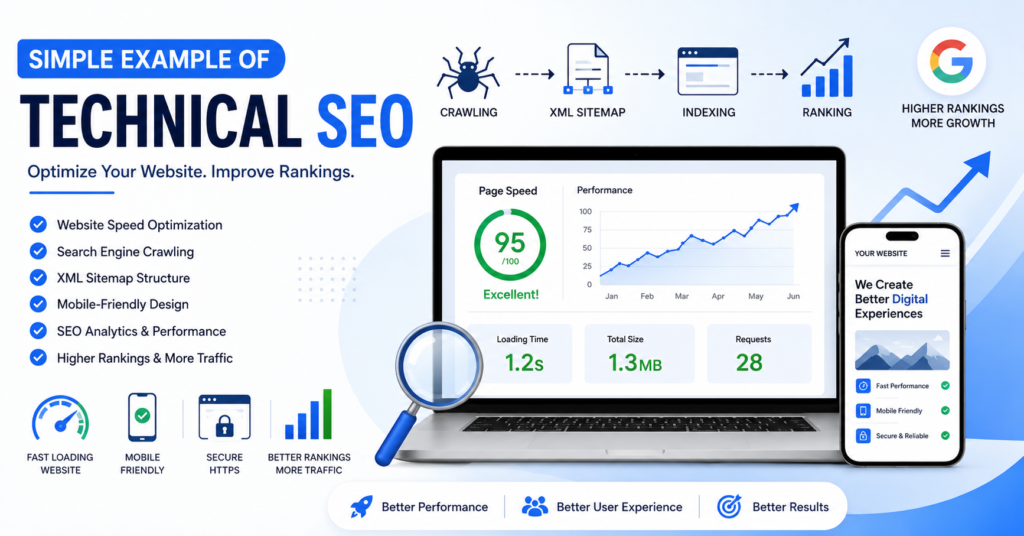
Technical SEO refers to the process of optimizing your website’s infrastructure so search engines can easily:
 Crawl your website
Index your pages
Understand your content
Provide a better user experience
Think of Technical SEO as building strong roads that help Google reach every page on your website quickly and efficiently.
Real-Life Example of Technical SEO
Imagine you own an online clothing store, but your website takes 7 seconds to load and several pages are not mobile-friendly. As a result, visitors leave quickly, and your Google rankings remain low.
After implementing Technical SEO improvements such as image compression, faster hosting, mobile optimization, HTTPS security, and fixing broken links, your website loads in under 2 seconds. This improves user experience, increases organic traffic, and helps your website rank higher on Google search results.
Result: Better rankings, more visitors, and increased sales through improved website performance. 
A Simple Example Of Technical SEO
Let’s say you own an online bakery website.
Your homepage loads very slowly and takes 8 seconds to open.
Problem:
Visitors leave before the page loads.
Google notices poor user experience and lowers your rankings.
Technical SEO Solution:
You:
- Compress images
- Enable browser caching
- Minify CSS and JavaScript files
- Upgrade hosting
Result:
- Page speed improves from 8 seconds to 2 seconds
- Visitors stay longer
- Bounce rate decreases
- Google rewards the website with better rankings
This is one of the simplest and most effective examples of Technical SEO.
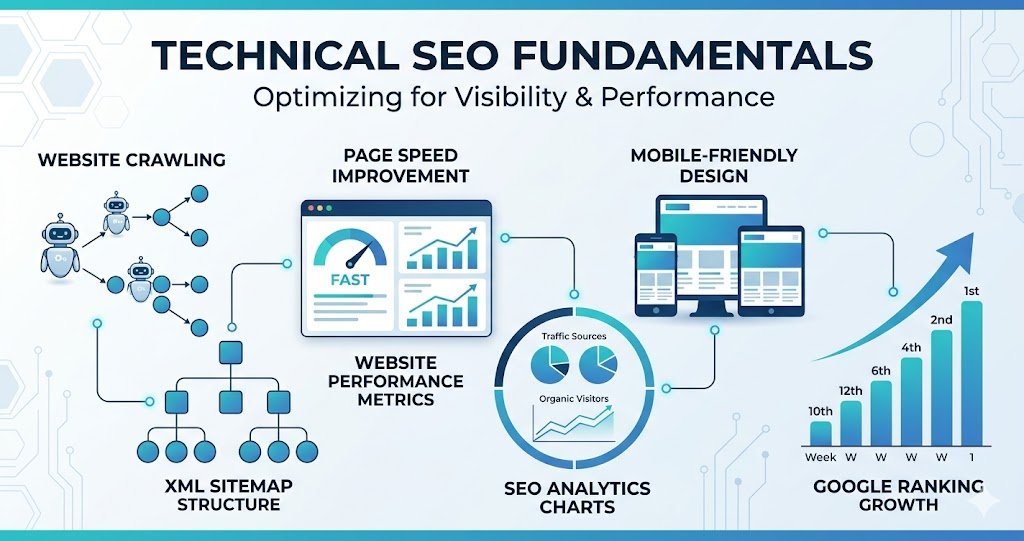
Visual Example: Before vs After Technical SEO
Before Optimization |
After Optimization |
Website loads in 8 seconds |
Website loads in 2 seconds |
High bounce rate |
Lower bounce rate |
Poor user experience |
Better user experience |
Lower rankings |
Higher rankings |
Fewer visitors |
More organic traffic |
Why Technical SEO Matters
Without Technical SEO, Google may struggle to understand your website.
Benefits include:
- Faster Website Loading
Users expect websites to load quickly.
Fast websites improve:
- User satisfaction
- Conversions
- Search rankings
- Better Crawling
Technical SEO helps search engine bots navigate your website efficiently.
- Improved Mobile Experience
Most users browse on smartphones.
Google prioritizes mobile-friendly websites.
- Higher Rankings
A technically optimized website often performs better in search results.
- Increased Organic Traffic
Better rankings naturally bring more visitors.
Common Technical SEO Elements
- Website Speed Optimization
Speed is one of the most important ranking factors.
Example:
Before:
- Large 5MB images
After:
- Compressed images under 300KB
Result:
- Faster loading pages
- Mobile-Friendliness
Your website should work perfectly on:
- Smartphones
- Tablets
- Desktop devices
Example:
A responsive design automatically adjusts to screen size.
- XML Sitemap
An XML sitemap helps search engines discover pages faster.
Example:
www.yourwebsite.com/sitemap.xml
- Robots.txt File
This file tells search engines which pages they can or cannot crawl.
Example:
User-agent: *
Allow: /
Sitemap: https://yourwebsite.com/sitemap.xml
- HTTPS Security
Google prefers secure websites.
Example: http://yourwebsite.com https://yourwebsite.com
Visitors trust secure websites more.
Real-Life Technical SEO Example
Imagine two identical websites:
Website A
- Slow speed
- Broken links
- No sitemap
- Not mobile-friendly
Website B
- Fast loading
- Mobile optimized
- XML sitemap
- Secure HTTPS
Which website will Google prefer?
 Website B.
This demonstrates how technical SEO directly impacts rankings.
Technical SEO Checklist For Beginners
Use this simple checklist:
 Improve page speed
Install SSL certificate
Create XML sitemap
Fix broken links
Optimize images
Make website mobile-friendly
Use clean URLs
Improve Core Web Vitals
Submit sitemap to Google Search Console
Check indexing issues regularly
FOMO Alert: Don’t Ignore Technical SEO!
 Many businesses invest thousands in content marketing and advertising but still fail to rank because of technical SEO issues.
Every day your website remains unoptimized:
Potential customers leave
Rankings drop
Competitors move ahead
Organic traffic opportunities are lost
The sooner you fix technical SEO problems, the faster your website can grow.
Best Tools For Technical SEO
Some useful tools include:
- Google Search Console
- Google PageSpeed Insights
- Screaming Frog SEO Spider
- GTmetrix
- Ahrefs Site Audit
- SEMrush Site Audit
These tools help identify technical issues affecting rankings.