How To Optimize Your Website For Local Search:
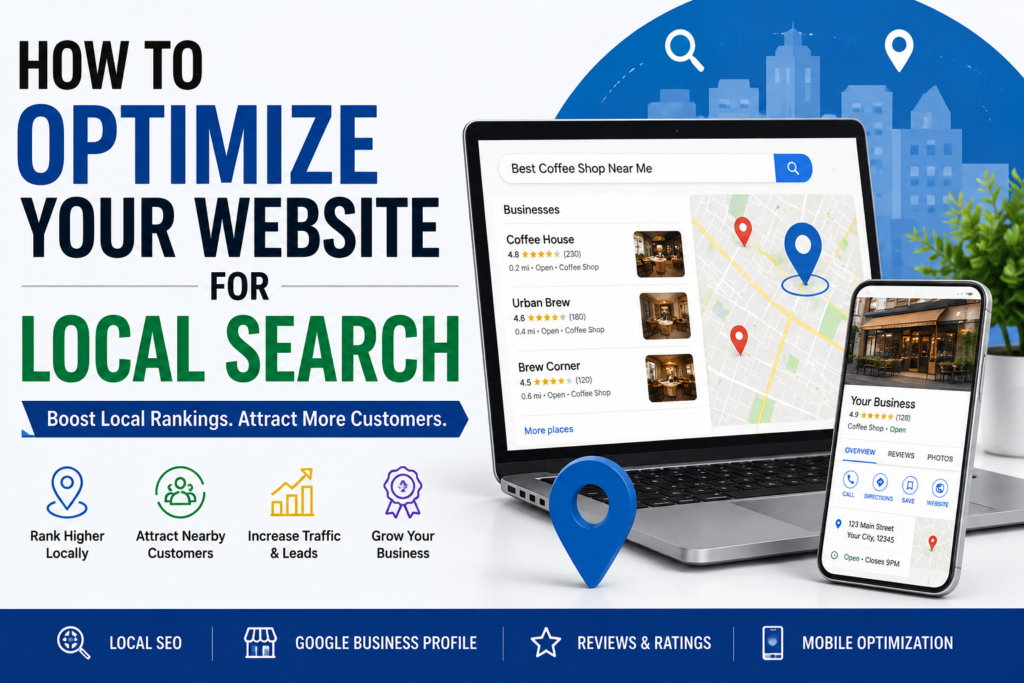
If you are a business owner operating a physical storefront or providing services across specific regions, you face a stark reality today.
Right now, your local competitors are quietly siphoning away high-intent buyers who live just five minutes from your doorstep.
Every minute you delay learning how to optimize your website for local search, you leave free, highly profitable organic traffic on the table for someone else to claim.
Local search is no longer just about filling out a basic map listing.
With Search Generative Experience (SGE) and conversational AI engines directly changing how users find immediate solutions, standard global SEO tactics won’t cut it.
To grab a spot in Google’s coveted Local 3-Pack, your digital footprint needs to be bulletproof.
How To Optimize Your Website For Local Search
Local search optimization is no longer optional. If your business serves customers in a specific city, town, or region, you need a strong local SEO strategy.
According to recent studies, over 80% of consumers use search engines to find local businesses before making a purchase decision.
If your website isn’t optimized for local search, your competitors are capturing those customers right now.
The good news? With the right approach, you can improve your visibility, attract qualified local traffic, and generate more leads without spending a fortune on advertising.
- Claim and Dominate Your Google Business Profile
It feeds the primary data cluster that Google reads to build its map results.
If your profile is incomplete, outdated, or unverified, you are essentially invisible.
Your Google Business Profile (GBP) functions as the storefront of your entire digital presence.
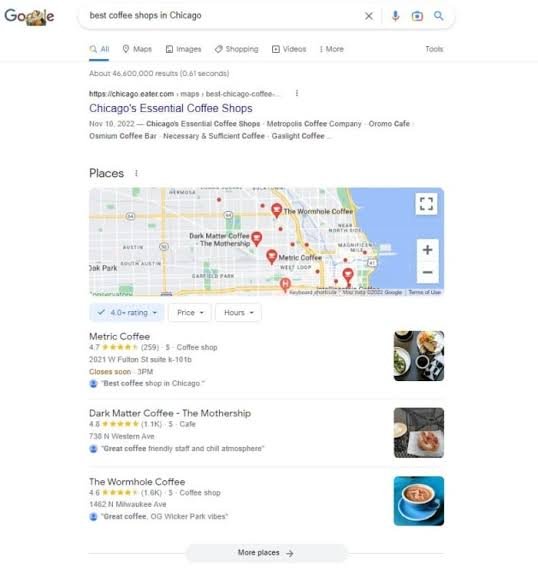
The Instant Optimization Checklist
- Absolute NAP Consistency: Your Name, Address, and Phone number must match exactly across your website, social accounts, and local registries. If your site says “Suite 400” but your GBP reads “Ste. 4”, search bots flag the inconsistency and reduce your trust score.
Connection Model
- Primary Category Accuracy: Choose your main category with absolute precision. If you are an “Organic Italian Restaurant,” do not simply select “Restaurant.”
- Active Visual Updates: Upload real, geo-tagged photos of your physical storefront, interior, and staff weekly. Profiles utilizing high-quality authentic images receive significantly more direction requests than those depending on stale stock imagery.
- Engineer a Mobile-First, Frictionless Local Website
Over 75% of local searches executed on mobile devices lead to an in-store visit or direct phone call within 24 hours. If your website takes more than three seconds to load over a standard cellular network, or forces a user to pinch-and-zoom to read an address, they will bounce instantly.
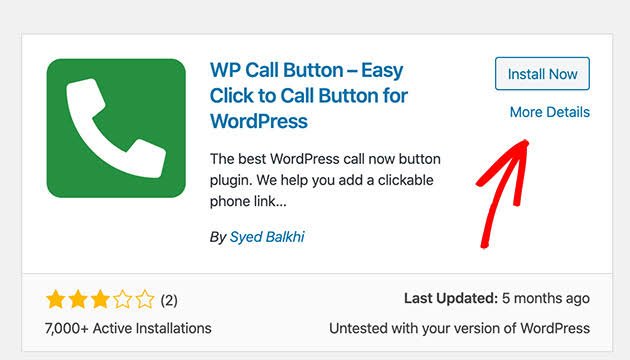
Frictionless UX: Keep high-intent calls a single tap away.. Source: SeedProd
To convert local search intent into actual revenue, your mobile user interface needs to be streamlined for immediate actions.
|
Core Mobile Element |
Crucial Function |
Implementation Standard |
|
Click-to-Call Buttons |
Allows immediate mobile dialing. |
Sticky header or prominent banner on every landing page. |
|
Embedded Google Map |
Validates physical location to bots and users. |
Standardized footer or dedicated Contact Us page. |
|
Localized Header Tags |
Signals geographic focus area to search crawlers. |
Include City + Service keywords natively within H1 and H2 tags. |
- Implement Local Business Schema Markup
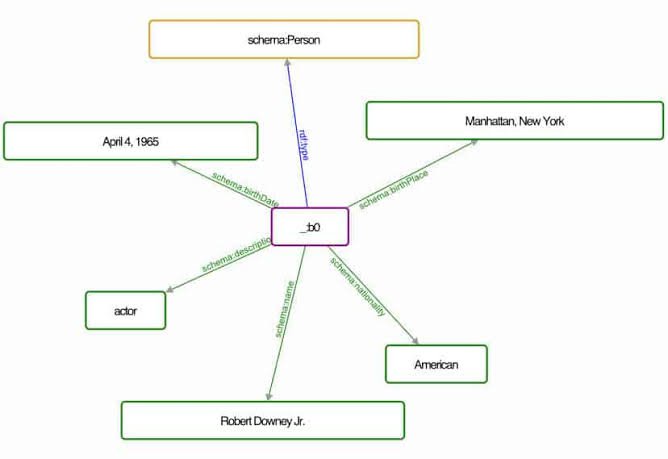
Search engines are highly sophisticated, but they still require explicit structural clues to parse the relationship between your web pages and physical geographic locations. Local Business Schema is a dedicated language format (JSON-LD syntax) embedded into your code that explicitly tells search engines what your business entity represents.
How schema structured data connects real-world business attributes to search engine graph entities.. Source: Dalton Luka
By deploying advanced structural schema, you ensure that search algorithms pull your accurate data directly into rich snippets, voice search responses, and local AI map overviews.
Mount Web Technologies
The Ultimate 4-Step Local SEO Sequence
If you want to quickly overtake local competitors who are currently outranking you, implement this systematic execution process immediately.
Perform a Local Keyword Audit
Step 1
1.Perform a Local Keyword Audit:Step
Identify high-intent geo-modifiers for your core business services. Map out terms structured around [Service] in [City] and common near me semantic variants that local buyers actively input.
Optimize Your Landing Page Architecture
Step 2
2.Optimize Your Landing Page Architecture:Step
If you manage multiple physical locations, construct unique, standalone landing pages for each branch. Avoid duplicating text across these pages—ensure each features localized staff bios, community reviews, unique phone numbers, and customized directions.
Build Consistent Citation Vaults
Step 3
3.Build Consistent Citation Vaults:Step
Submit your standardized NAP information to high-authority aggregate platforms like Yelp, Bing Places, YellowPages, and localized Chambers of Commerce. This cements your digital entity credibility across the web.
Automate Your Review Acceleration Funnel
4.Automate Your Review Acceleration Funnel:
Step 4
Establish an automated email or SMS sequence that prompts customers to leave a review immediately following a successful purchase. Focus heavily on acquiring fresh, descriptive reviews that mention specific services or location names naturally within the text.
The Cost of Inaction: Every single day your website remains unoptimized for local search algorithms, nearby customers are actively discovering and calling your direct competitors instead. Local SEO isn’t a long-term luxury—it is an immediate operational necessity.
Frequently Asked Questions
Why is my business not showing up in the Google Map Pack?
The most frequent culprits behind missing map listings are an unverified or suspended Google Business Profile, severe inconsistencies in your Name, Address, and Phone number (NAP) data across web registries, or a complete lack of localized content and authority signals on your primary website.
Should I create separate pages on my website for different neighborhoods
Yes. If you actively serve multiple distinct neighborhoods or suburbs within a major metropolitan region, constructing dedicated, high-quality location pages containing hyper-local descriptions, regional case studies, and local reviews will drastically expand your geographic search reach.
Boulder SEO Marketing
How do customer reviews impact my local search positions?
Customer reviews serve as a primary prominence and authority signal for Google’s core algorithm. Search engines analyze both the raw star rating and the specific keyword sentiment hidden inside customer text. Frequently receiving fresh reviews containing your localized service terms acts as a major rank-boosting signal.
ViserX+ 1
Ready to scale your local lead generation? Select your next step below:
Generate a custom Local Schema JSON-LD template
Final Thoughts