Digital Marketing vs Traditional Marketing: Which Strategy Delivers Better Results in 2026?
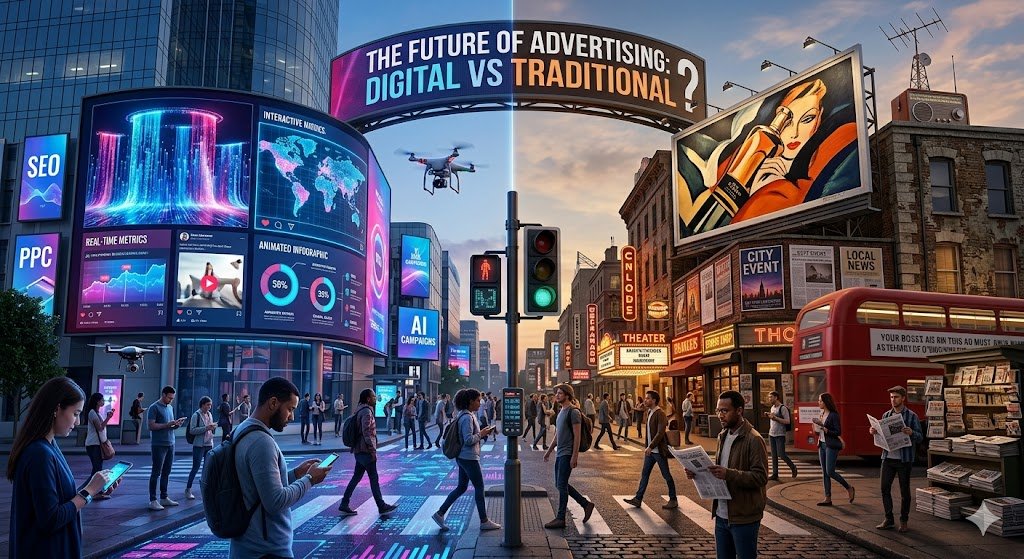
In the modern business world, marketing is no longer just about putting advertisements in newspapers or running television commercials. Consumer behavior has completely changed. Today, people search online before buying products, compare brands on social media, and read reviews before making decisions. Because of this shift, businesses are asking an important question:
digital marketing vs traditional marketing — which one is better?
The answer depends on your goals, audience, and budget. However, in 2026, digital marketing is becoming the dominant force for business growth because it offers better targeting, faster engagement, and measurable results.
Let’s explore the difference between digital marketing and traditional marketing in detail and understand which strategy works best for modern businesses.
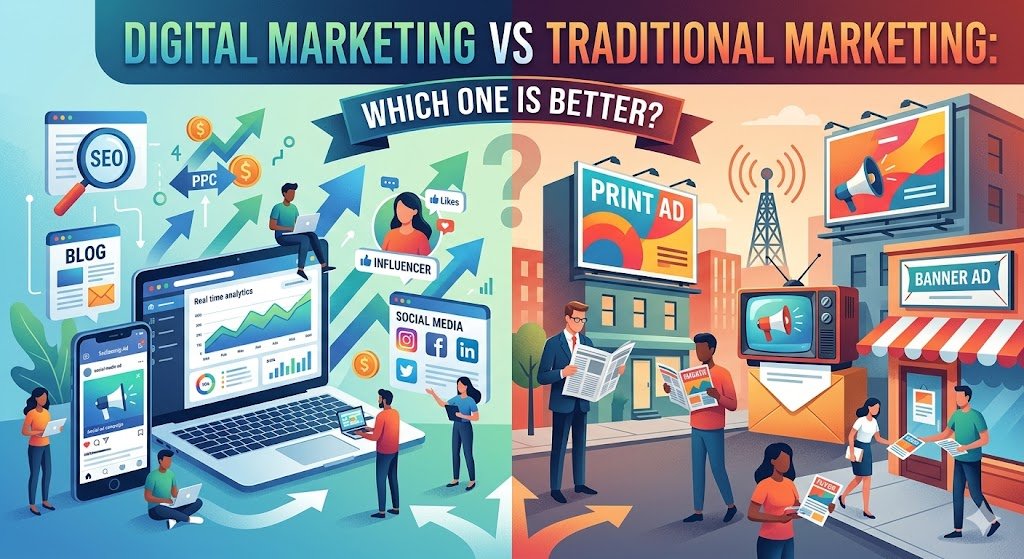
Digital marketing vs traditional marketing is one of the most important comparisons for businesses in 2026.
Digital marketing uses online platforms like Google, social media, email, and websites to reach targeted audiences, while traditional marketing relies on offline methods such as TV ads, newspapers, radio, and billboards. Digital marketing is considered better for most businesses because it offers lower costs, better audience targeting, real-time performance tracking, higher customer engagement, and improved ROI. Traditional marketing still works well for local branding and older audiences, but digital marketing provides faster growth and measurable results. Businesses that combine both strategies effectively can maximize brand visibility and customer reach.
Digital Marketing vs Traditional Marketing Advantages
Digital marketing offers several advantages over traditional marketing in today’s online-driven world. It helps businesses reach targeted audiences through platforms like Google, Facebook, Instagram, email, and websites at a lower cost. Digital marketing provides real-time analytics, allowing businesses to track clicks, conversions, customer engagement, and ROI instantly. It also enables direct interaction with customers through social media, live chats, and comments, improving trust and brand loyalty. Traditional marketing, on the other hand, still provides strong local visibility through TV ads, newspapers, radio, and billboards. It is effective for building brand recognition among offline audiences and older consumers. Combining both strategies can help businesses maximize reach and long-term growth.
Digital Marketing vs Traditional Marketing Differences
The main difference between digital marketing and traditional marketing is the platform used to reach customers. Digital marketing uses online channels such as search engines, social media, websites, and email campaigns, while traditional marketing relies on offline methods like television, newspapers, magazines, radio, and flyers. Digital marketing is more cost-effective, measurable, and audience-focused because businesses can target specific customer groups and track campaign performance in real time. Traditional marketing usually targets a broader audience but lacks detailed analytics and flexibility. Digital marketing also allows businesses to modify campaigns instantly, whereas traditional advertising often requires more time and higher investment to make changes.
Online Marketing vs Offline Marketing
Online marketing and offline marketing are two different approaches businesses use to promote products and services. Online marketing uses internet-based platforms such as websites, social media, search engines, email campaigns, and online advertisements to reach customers globally. It is cost-effective, highly targeted, and allows businesses to track performance in real time. Offline marketing, also known as traditional marketing, uses methods like newspapers, television, radio, flyers, billboards, and direct mail to attract customers. While offline marketing helps build local brand awareness and trust, online marketing provides faster engagement, better audience targeting, and higher ROI for most modern businesses.
Digital Advertising vs Traditional Advertising
Digital advertising focuses on promoting businesses through online channels like Google Ads, Facebook Ads, Instagram promotions, YouTube ads, and display networks. It allows businesses to target specific audiences based on interests, location, age, and online behavior while providing measurable results and flexible budgeting. Traditional advertising includes television commercials, newspaper ads, magazine promotions, radio advertisements, and outdoor billboards. Traditional advertising is effective for mass awareness and local branding but is often more expensive and difficult to measure. Digital advertising is considered more effective in 2026 because it offers better targeting, real-time analytics, and improved customer engagement.
Understanding Digital Marketing
Digital marketing is the process of promoting products or services through online platforms and internet-based channels. Businesses use digital strategies to connect directly with customers where they spend most of their time — online.
Popular Digital Marketing Channels
- Search Engine Optimization (SEO)
- Google Ads
- Social Media Marketing
- YouTube Marketing
- Email Campaigns
- Influencer Collaborations
- Content Marketing
- Mobile Marketing
Unlike traditional methods, digital campaigns can be launched instantly and optimized anytime.
What is Traditional Marketing?
Traditional marketing refers to conventional advertising methods used before the rise of the internet. These methods are still used by many businesses for brand awareness and local promotions.
Traditional Marketing Examples
- Newspaper Advertising
- Television Commercials
- Radio Promotions
- Billboards & Hoardings
- Flyers & Pamphlets
- Magazine Ads
- Event Sponsorships
Traditional marketing mainly targets mass audiences through offline media.
Key Difference Between Digital Marketing and Traditional Marketing
Marketing Factor |
Digital Marketing |
Traditional Marketing |
Cost |
Budget-friendly |
Expensive |
Audience Reach |
Global |
Mostly local |
Engagement |
Two-way communication |
One-way communication |
Results Tracking |
Real-time analytics |
Difficult to measure |
Flexibility |
Easy campaign changes |
Hard to modify |
Speed |
Instant publishing |
Slower execution |
Targeting |
Highly specific |
Broad targeting |
ROI |
Higher returns |
Lower returns |
Why Businesses Prefer Digital Marketing in 2026
- Lower Marketing Costs
One major reason businesses choose digital marketing is affordability. Small companies can start online advertising with limited budgets and still reach thousands of people.
Traditional marketing often requires huge investments in printing, broadcasting, or outdoor advertising.
For startups and local businesses, digital marketing provides faster visibility without spending massive amounts of money.
- Precise Audience Targeting
Digital marketing allows brands to reach people based on:
- Interests
- Age group
- Location
- Buying behavior
- Search history
- Device usage
This precision improves conversion rates because businesses show advertisements only to relevant audiences.
Traditional marketing cannot provide this level of customer targeting.
- Better Customer Engagement
Digital platforms help businesses communicate directly with customers through comments, messages, live sessions, and reviews.
This creates trust and improves customer relationships.
Traditional marketing methods usually deliver one-way communication without direct interaction.
- Real-Time Performance Tracking
Digital campaigns provide detailed analytics, including:
- Website traffic
- Ad performance
- Conversion rates
- Customer clicks
- Bounce rates
- Sales reports
Businesses can instantly improve campaigns based on performance data.
Traditional marketing does not provide accurate tracking systems.
- Faster Brand Growth
Businesses using SEO, social media marketing, and video marketing can grow rapidly because online audiences are huge.
Consumers now spend several hours daily on smartphones, social platforms, and search engines. Companies that build a strong digital presence gain a competitive advantage faster.